Real-world experiences along the production chain, from quality to safety
THE Ò-BLOG
Industrial AI for the steel industry
10 September 2025
Reading time: 3 minutes
In recent years, we have had the opportunity to collaborate with some of the leading companies in the steel sector, tackling ambitious challenges and turning them into concrete innovation opportunities.
A steel plant is a complex system: interconnected processes, strict parameters, and quality that must be ensured at every stage. In this context, Artificial Intelligence is not just an “experiment,” but a powerful tool that, when properly integrated, delivers immediate and measurable value.
This is demonstrated by the projects we have developed with our partners, which allowed us to explore three key areas: using Computer Vision to monitor quality and safety, Optimization to manage production complexity, and Generative AI to make industrial knowledge more accessible.
Computer Vision: quality and traceability
Computer vision is now a key tool to make inspections faster, more objective, and more comprehensive—tasks that were previously reliant solely on operator experience. With AI-go, we have deployed this technology at several points along the production chain:
- Automated metallographic analysis: deep learning models analyze laboratory images (detecting impurities and inclusions, measuring ferrite/austenite ratio), reducing time and variability while integrating directly into the analysis workflow.
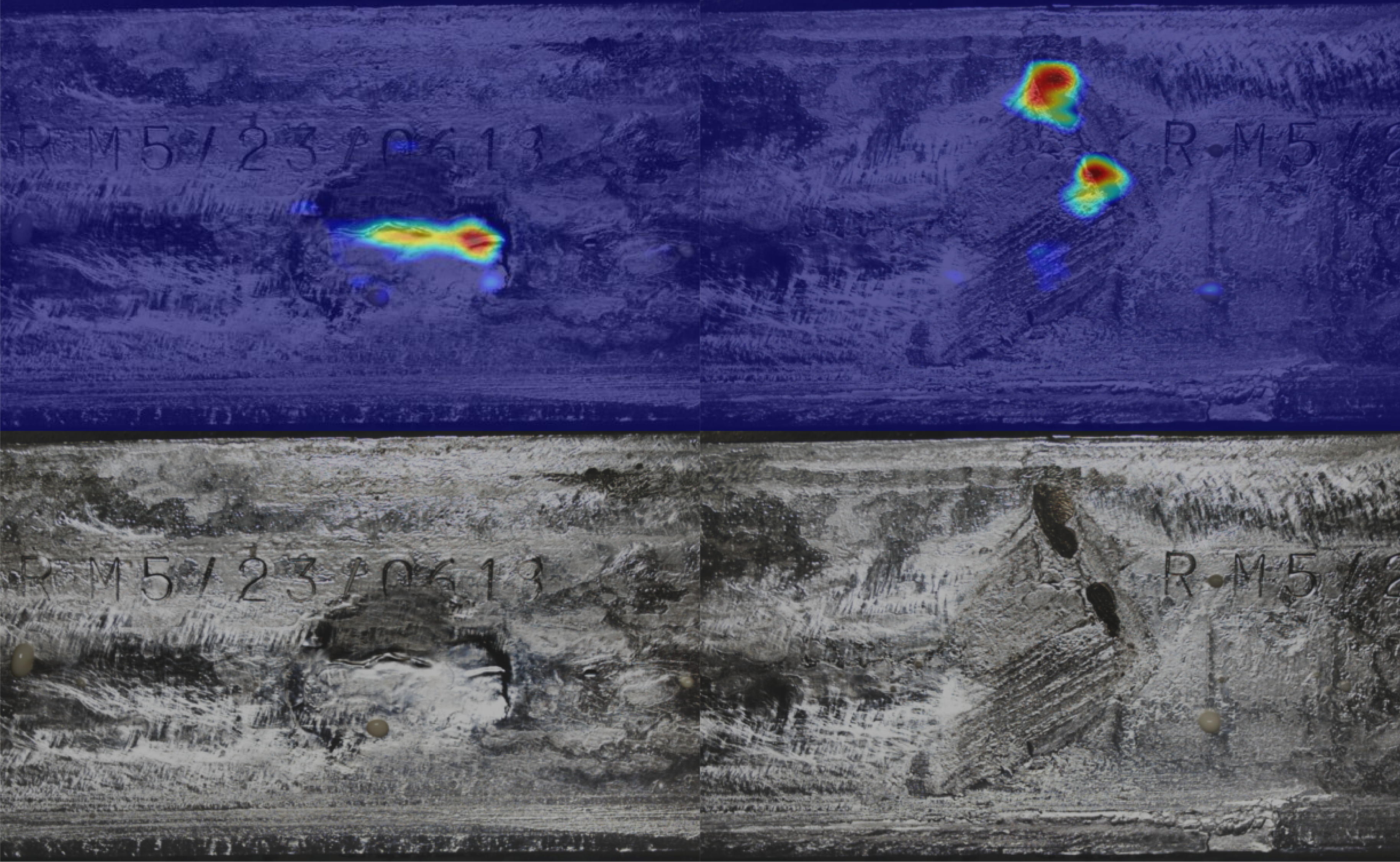
- Continuous casting defect detection: anomaly detection systems analyze 100% of the extruded surface, automatically classify defects, and ensure compliance with quality standards.
- Incoming scrap inspection: semantic segmentation algorithms accurately identify contaminants and foreign materials that could compromise the purity and conformity of recycled material.
- Bloom identification and traceability: optical solutions and software recognize labels and read QR codes, reducing retrieval times and improving traceability of semi-finished products.
Optimization: efficiency in complex processes
Steel production involves thousands of orders, strict technical constraints, and variability in raw materials and machinery. To manage this complexity, we developed Op.pla, an optimization system designed to improve production planning:
- Finite-capacity production planning: algorithms that respect sequences, plant constraints, and setups, reducing late orders by 50% and improving the company’s ability to handle unexpected events by simulating different production scenarios.
- Nesting and logistics optimization: models that aggregate orders, select the optimal coil, and plan transportation, minimizing waste and logistical costs.
Generative AI: safety and knowledge access
Plant safety is not only about preventing accidents but also about immediate access to critical information. With tekiDOC, we introduced Generative AI in the plant to support workers:
- Conversational HSE assistant: a chatbot that allows operators and technicians to quickly access safety documentation, certifications, and procedures through natural language interaction.
- Near-miss detection via computer vision: intelligent video systems capable of identifying risky behaviors and improper use of PPE, reporting potential hazards in real time.
Lessons learned on the ground
Each project allowed us to face real-world challenges, learning what truly works when AI is applied in production:
- In Computer Vision projects, the main challenges involved operational conditions and defining the optimal acquisition system and lighting, essential for reliable models in the plant.
- Optimization projects required longer development times due to numerous constraints, complex parameters, and the need to coordinate multiple departments.
- Generative AI projects delivered faster results: the technology allows solutions to be demonstrated quickly and improved through usage, making already well-structured documentation more accessible and user-friendly.
From these experiences, we have identified several key elements that make a real difference:
- a clear use case recognized by the people working daily in the plant;
- simple and accessible interfaces, even for those without a technical background;
- rapid, non-intrusive yet realistic field testing, generating immediate value;
- close collaboration between those who know the industrial processes and those who develop the technologies.
The steel industry is demanding, and precisely for this reason, it is open to innovation when it delivers tangible results.
At Orobix, we have already put ourselves to the test, transforming AI into real and reliable solutions for the steel sector. Contact us to explore the solution that best fits your company: ✉️ info@orobix.com
