From field data collection to more accurate and sustainable decisions
THE Ò-BLOG
Estimating Vineyard Yield with AI
April 20, 2026
Reading time: 3 minutes
In the wine industry, yield per hectare is much more than just a number.
It is one of the key factors that determine a wine’s style, quality, and market positioning.
Yet, even today, estimating it reliably and far enough in advance remains a challenge.
In this article, we explore how Artificial Intelligence can support yield estimation and improve decision-making in the vineyard, building on what we have learned working in the field alongside our customers, who have shared their expertise and agronomic knowledge with us.
Why is yield so important?
Yield per hectare, i.e., the amount of grapes harvested per hectare of vineyard, reflects deep agronomic and strategic choices.
- Higher yields mean more clusters per vine and therefore a greater number of berries to ripen. Under these conditions, the vine must distribute its resources (sugars, aromas, and polyphenolic compounds) across a larger number of clusters. As a result, each berry tends to have a lower concentration of these components, leading to wines that are generally lighter and less structured.
- Lower yields, on the other hand, imply fewer clusters per vine. This allows the vine to concentrate its resources on fewer berries, promoting a higher accumulation of sugars, aromas, and polyphenols. These grapes typically produce wines that are more structured, complex, and age-worthy, with greater aromatic intensity and aging potential.
However, lower yield does not automatically mean higher quality.
Final quality depends primarily on vineyard and winery practices. A low-yield vineyard can still produce unbalanced grapes if poorly managed, just as higher yields can result in excellent wines when supported by precise agronomic practices.
Yield is such a defining factor that production regulations for DOC and DOCG wines set maximum yield limits per hectare, ensuring consistency with the territory and the style of the denomination.
Why is early yield estimation so important today?
In recent years, yield estimation has become increasingly critical—not only for agronomic reasons, but also for economic and market-driven ones.Estimating yield in advance helps address key challenges:
- Declining consumption → avoiding overproduction
- Increasing cellar inventories → reducing unsold stock, with economic and logistical benefits
- Supply-demand imbalance → mitigating the risk of price drops and margin erosion
In this context, having reliable data in advance enables better production control, harvest planning, and overall supply chain optimization.
The best timing for yield estimation
Yield can be estimated at different stages of the growing season, but one of the most important is the veraison phase. This is the phenological stage when:berries change color (from green to yellow/red), photosynthesis declines, sugar accumulation begins.
Veraison is a crucial indicator of ripening progress and a key temporal reference point for harvest planning.
Estimating yield at this stage, approximately 1 to 2 months before harvest, provides the right balance between accuracy and decision-making capability.
How AI-based yield estimation works
Orobix has developed QUALYfruit, an Artificial Intelligence system already deployed in production that estimates vineyard yield from images collected directly in the field.
The principle is simple:
turn vine images into actionable quantitative data.
One of the most innovative aspects is that no dedicated field operations are required, and there is no need to map the entire vineyard.
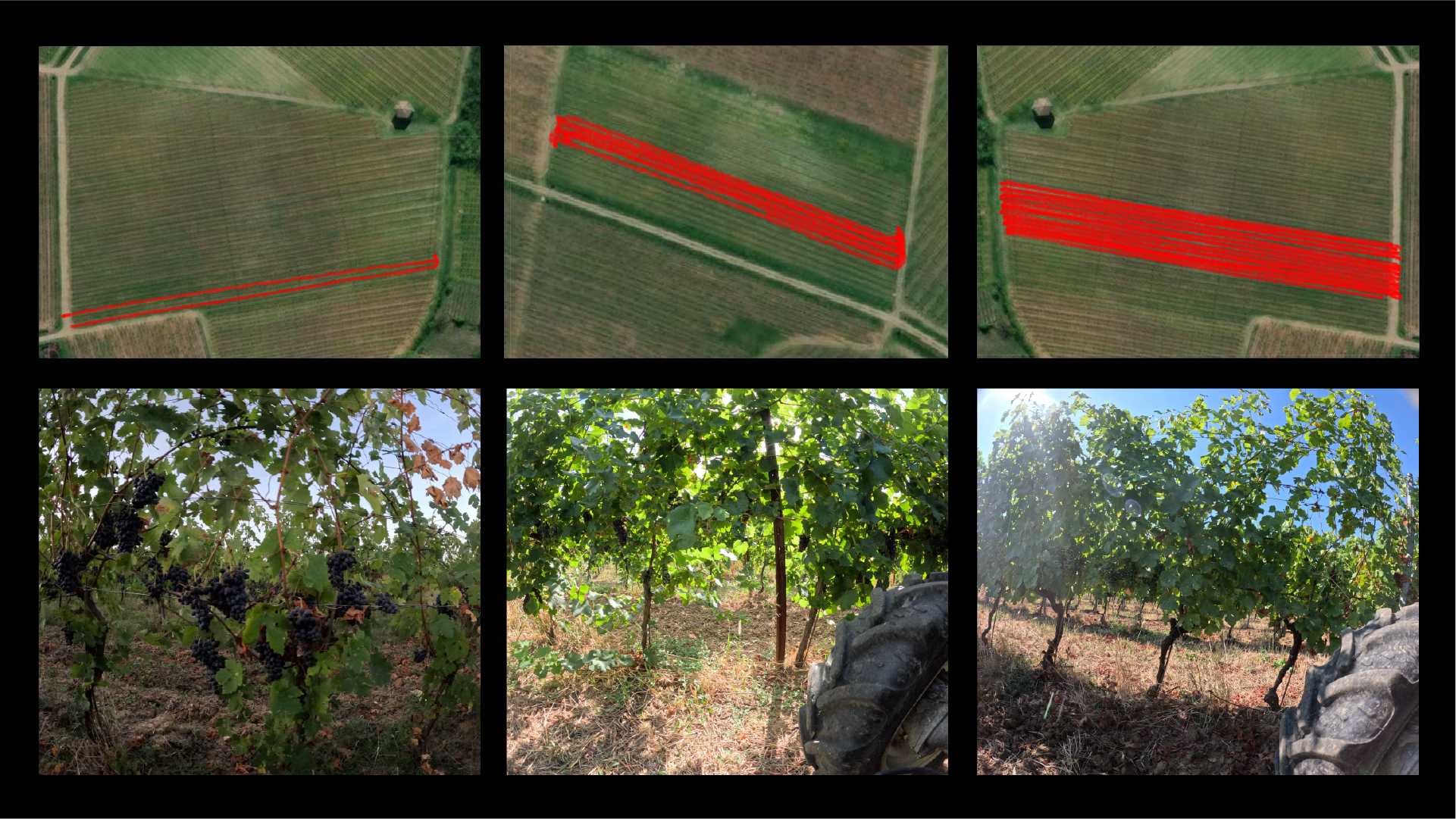
Images are collected during routine activities (spraying, inspections, field passes).
In homogeneous vineyards, a few rows are sufficient to obtain reliable estimates; in more variable vineyards, sampling different areas allows capturing yield variability across zones.
From field to data: QUALYfruit on-the-go
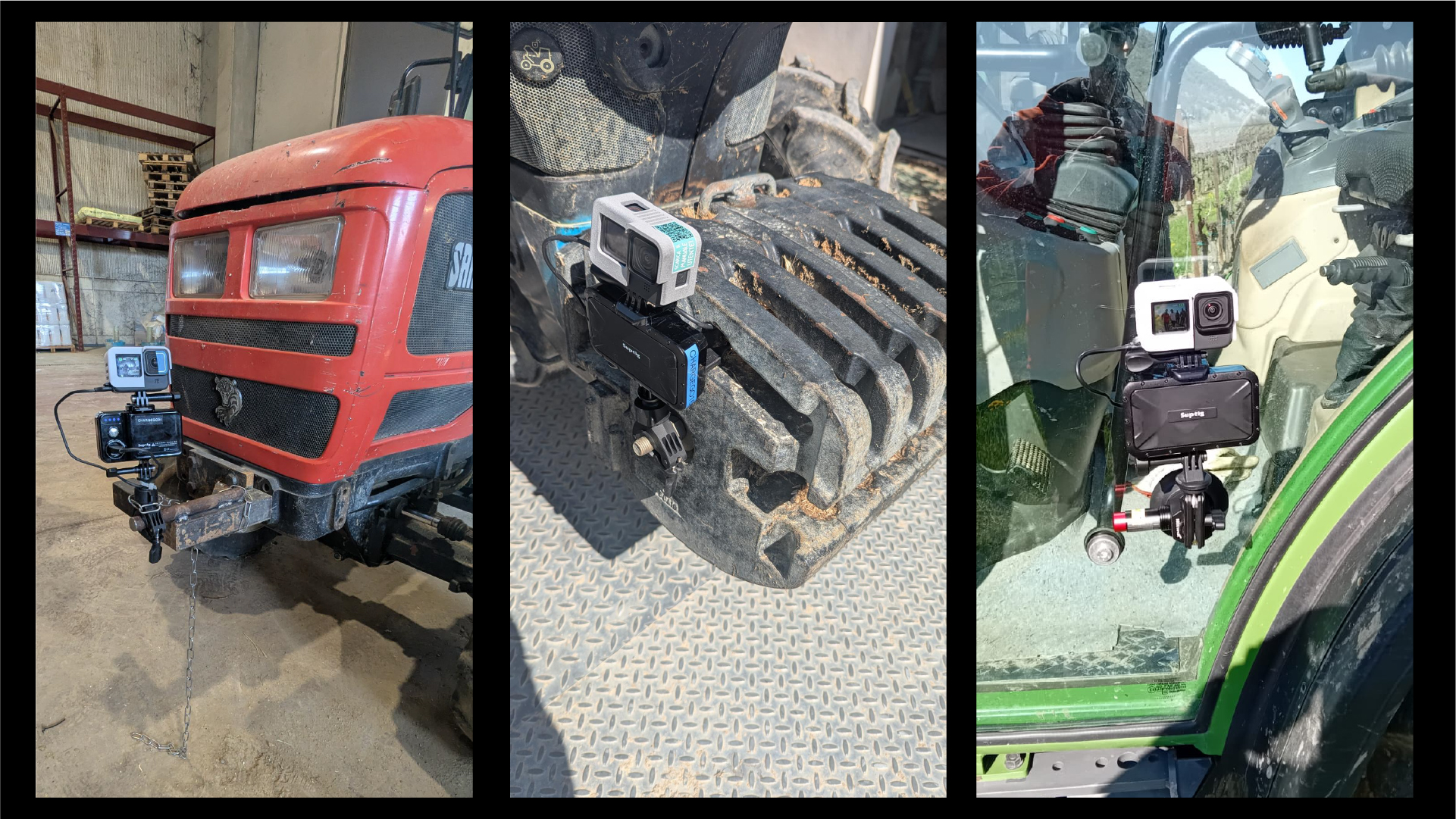
To make this possible in real-world conditions, we developed the QUALYfruit on-the-go kit.
A practical and robust system that turns any agricultural vehicle into a data collection platform, using a camera, a mini PC, a power bank, and multiple mounting systems adaptable to different vehicles.
The workflow is simple:
mount the camera, carry out normal operations… and data is automatically collected and processed.
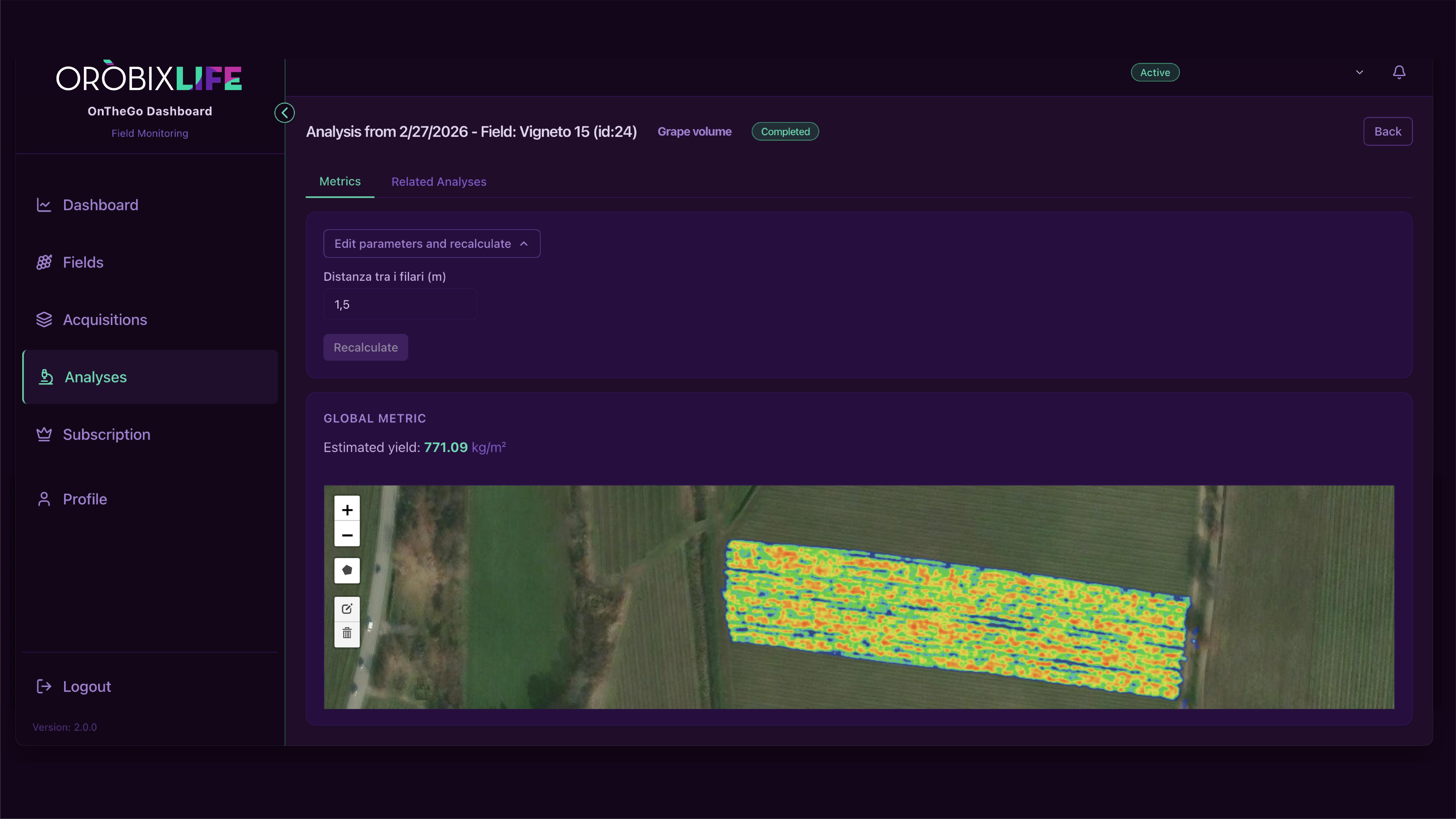
Back in the office, results can be accessed through a dashboard providing georeferenced heatmaps and quantitative indicators related to yield and grape quality.
From images to decisions
The result is an objective and measurable view of the vineyard, supporting growers, agronomists, and winemakers. Unlike traditional estimates based on manual sampling—and therefore subject to variability—AI-based analysis provides more objective, repeatable, and consistent evaluations over time.
The goal is not to replace professional expertise, but to enhance it.
Over time, thanks to close collaboration with our customers in real field conditions, we have refined our model to achieve estimates very close to actual yield, with a level of accuracy that makes the data practically usable for harvest and production planning.
With early and reliable yield estimation, it becomes possible to better plan harvest operations, optimize winery management, fine-tune agronomic interventions, and align production with commercial strategy.
A lever for sustainability
Artificial Intelligence applied to viticulture is not just a technological advancement. It is a practical tool to improve sustainability:
- Economic → reducing waste and improving margin management
- Environmental → more efficient use of resources
- Social → supporting decision-making and enhancing human expertise
With solutions like QUALYfruit, AI moves from theory to the field, becoming a daily ally for those facing complex decisions under increasing time pressure.
Because today, more than ever, producing better also means making better decisions.
Would you like to try it yourself?
Request a free demo of QUALYfruit on-the-go and discover how to bring AI into your vineyards—without complexity.
Or contact us at: info@orobix.com 📩
