THE Ò-BLOG
AI for the automotive manufacturing
October 15, 2025
Reading time: 3 minutes
In the automotive industry, quality and safety often go hand in hand.
Every component, mechanical or electronic, must meet the highest standards, as even a seemingly minor defect can compromise vehicle reliability and, in some cases, driver safety.
Today, artificial intelligence provides tangible support by assisting line operators during the most critical stages: from final product inspection to process verification.
It doesn’t replace human expertise; it amplifies it, offering continuous, objective, and traceable quality control.
From automation to ccollaboration: AI that empowers people
Over the past few years, Orobix has partnered with leading automotive companies to develop AI-based quality control systems. These solutions were born from real-world challenges: hard-to-detect defects, slow or subjective manual inspections, and traditional vision systems unable to cope with real-world variability.
The goal is always the same: reduce errors, increase precision, and free up human time and expertise, all while maintaining transparency and traceability in AI-driven decisions.
From this field experience came AI-go, our platform for training and deploying AI models for industrial vision inspection:
- AI-go Studio: train and specialize AI models in minutes using production data, with minimal examples and no coding or AI expertise required;
- AI-go Runtime: run real-time inferences fully aligned with production cycle times.
This end-to-end approach brings AI directly into production environments without replacing existing hardware. It keeps human supervision at the center and ensures continuous monitoring of model performance for long-term stability and reliability.
AI for product inspection
AI-powered quality control is more efficient, reliable, and consistent than manual inspections or traditional vision systems hough it’s not always the universal answer. In low-variability contexts, where defects are uniform and easily detectable, traditional systems remain perfectly adequate.
In automotive manufacturing, detecting a defect at the right time means avoiding costly recalls and protecting brand reputation.
AI learns what “normal” looks like for a product and flags any deviation—providing consistent, shift-independent inspection. This approach can extend across the entire supply chain: applying AI to incoming material checks prevents defects from entering the assembly line, reducing waste, rework, and downtime.
Application Examples
- Automatic Detection of Cracks in Gears
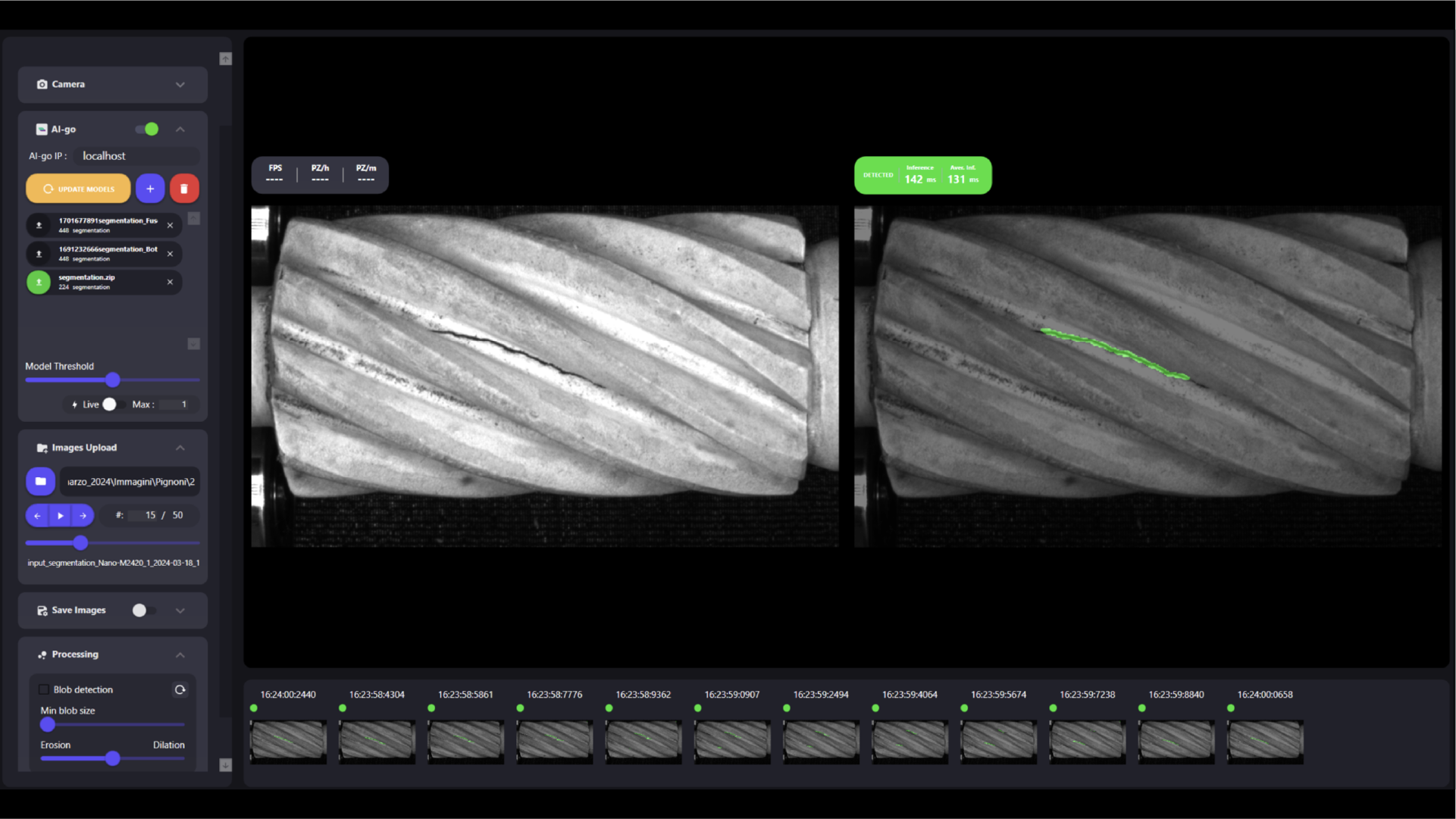
A segmentation model identifies and localizes cracks, with edge inference and cloud training on data annotated in collaboration with metallurgical experts. 👉 Result: more precise detection, lower inspection costs, and more sustainable heat treatment processes. - Detection of Micro-Surface Defects
Two AI models work together to identify minimal defects even on irregular or dirty surfaces. 👉 Result: fewer false rejects, greater repeatability, and improved safety for structural components. - Rubber-to-Metal Bond Quality Control
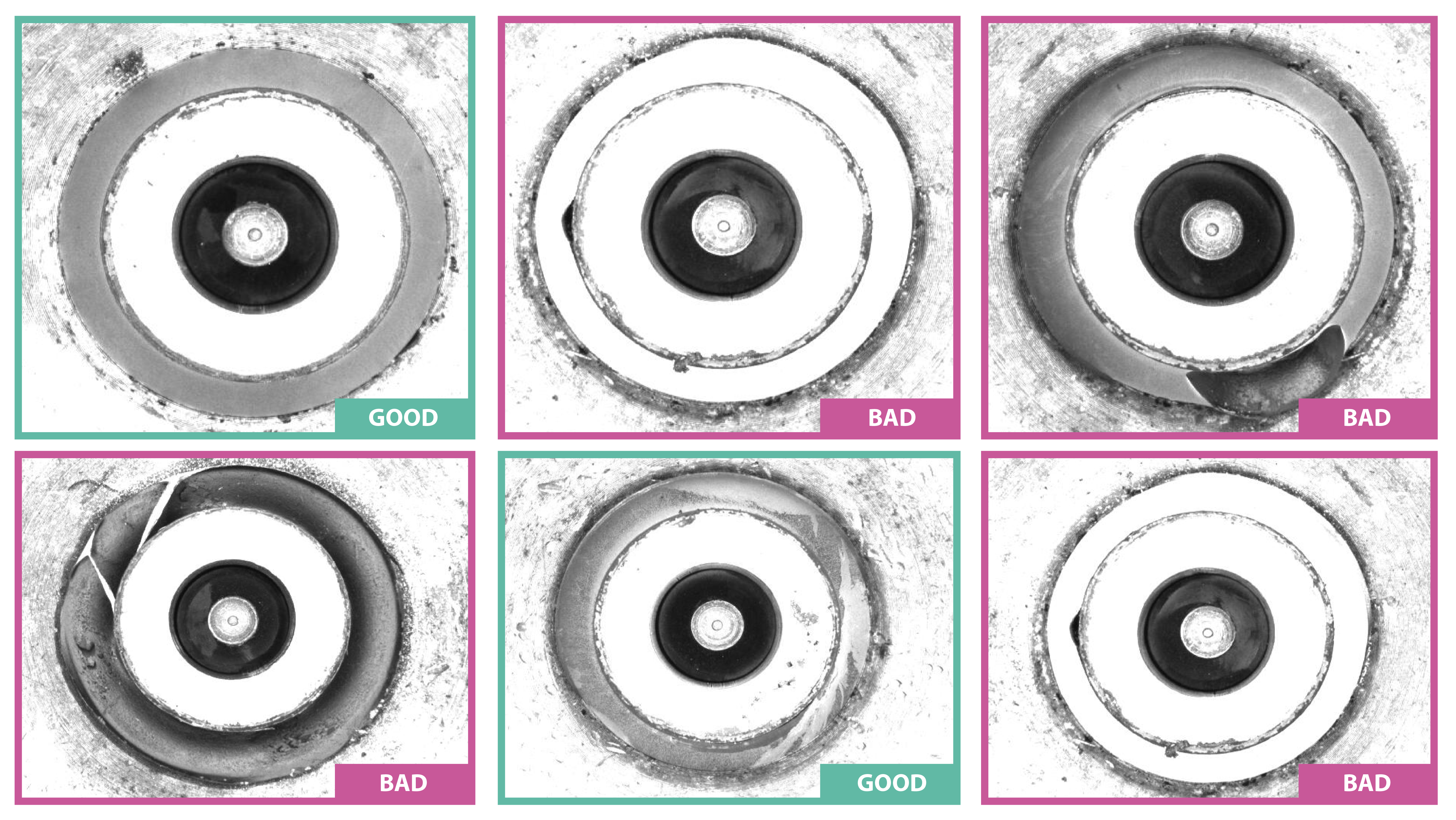
AI replaces a traditional vision system while reusing the existing hardware. 👉 Result: zero false positives, drastically fewer false rejects, and continuous algorithm performance monitoring. - PCB Quality Inspection for Automotive Pumps
An unsupervised anomaly detection model learns the normal behavior of circuit boards and highlights deviations via intuitive heatmaps. 👉 Result: early defect detection even without defect images, with higher robustness and functional safety.
These solutions not only enhance the quality of individual components but also strengthen and make the entire production chain more transparent, ensuring consistent standards throughout assembly.
AI for process quality
Quality doesn’t depend solely on the finished part, it also depends on how it’s made. Processes like broaching or surface finishing demand specialized expertise and extreme precision. However, a shortage of skilled labor increasingly calls for technological support.
AI helps operators evaluate process quality in real time, signaling anomalies or process drifts (such as tool wear) before they result in defects. It provides objective, visual feedback—reducing variability in assessments and improving consistency across shifts and operators.
Application Examples
- Broaching Defect Analysis
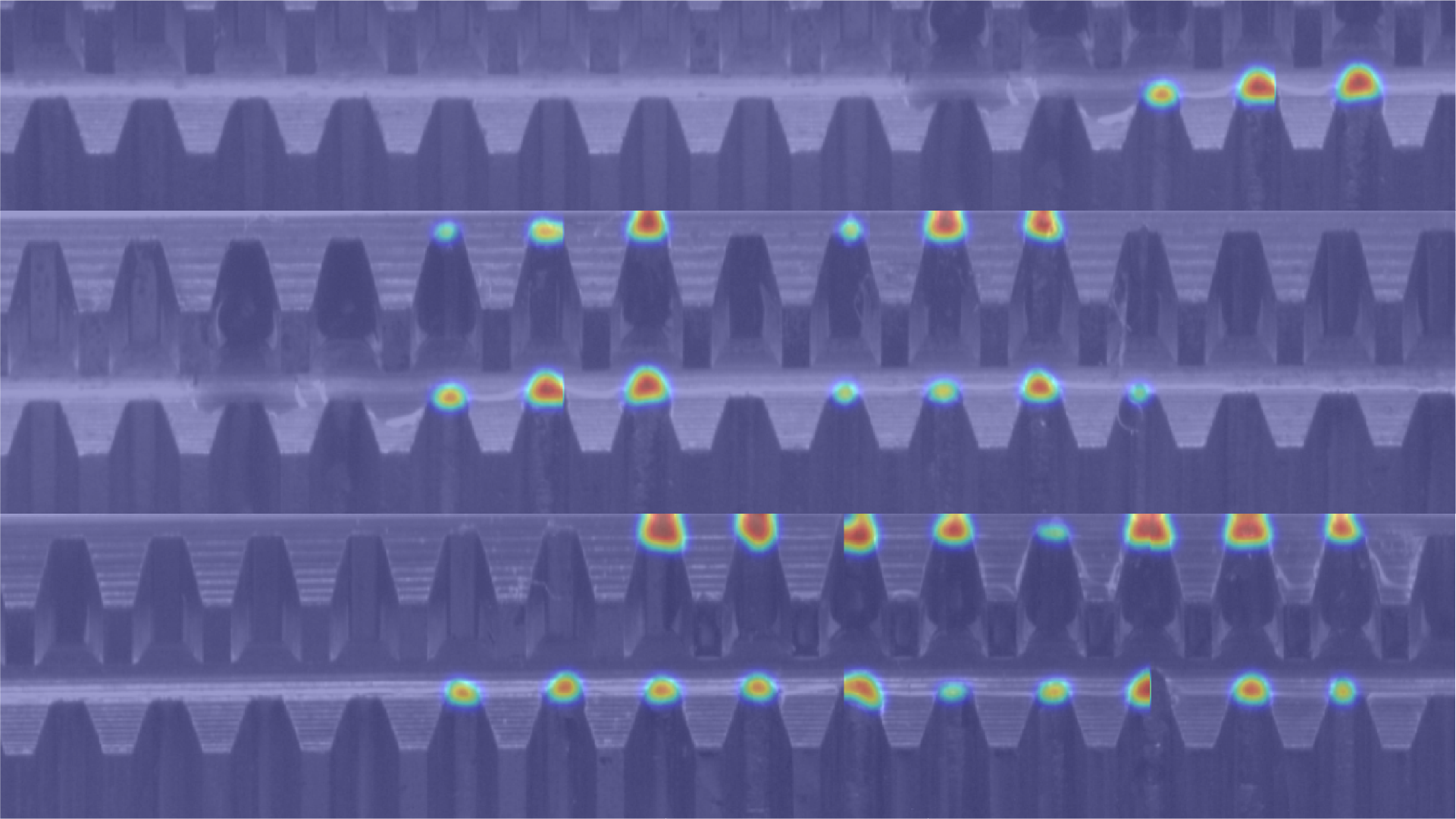
An anomaly detection model learns the correct machining profile and flags even minimal deviations. 👉 Result: immediate identification of tool wear and fewer scrap parts. Operators can intervene before quality issues affect the batch. - Worked Area Identification
Semantic segmentation models automatically distinguish between worked and unworked areas, creating objective maps of finishing zones. 👉 Result: automated and traceable verification, reduced subjectivity, and reliable support for operators even in suboptimal conditions.
In both cases, AI doesn’t decide for the operator—it collaborates, enhancing their control capabilities and enabling a more efficient, precise, and safe production process.
Toward truly intelligent quality control
Artificial intelligence in the automotive industry is no longer just an innovation experiment—it’s a concrete response to production needs. t shortens lead times, cuts costs, and, most importantly, ensures quality, safety, and operational continuity while empowering the people who make it all work. In a market demanding ever more efficient, sustainable, and traceable processes, AI stands as a strategic ally for manufacturers, operators, and end customers alike.
👉 If your company wants to explore how AI can transform quality control processes, get in touch: ✉️ info@orobix.com
We’re ready to build your next project—together.
