MICROCARD Project - "Numerical modeling of cardiac electrophysiology at the cellular scale”
THE Ò-BLOG
Simulating the human heart with HPC
17 November 2025
Reading time: 3 minutes
In recent years, computational simulation has become an increasingly important tool for understanding complex systems such as the human heart. With the project MICROCARD – “Numerical modeling of cardiac electrophysiology at the cellular scale”, a significant step has been taken toward the simulation of the entire heart at subcellular resolution, opening new perspectives for biomedical research and clinical practice.
The project was carried out with the support of the European Union, the Italian Ministry of Enterprises and Made in Italy, and Regione Lombardia. At the European level, MICROCARD was funded within the EuroHPC initiative, with a total budget of €5.8 million and the involvement of 11 partners including universities, research centers, and companies. In Italy, the project involved Orobix and the University of Pavia, with total funding of €288,627.49.
Why simulating the heart is so challenging
Cardiovascular diseases are the leading cause of death worldwide, and about half of these deaths are linked to arrhythmias, i.e., disorders in the electrical synchronization of the heart. Understanding these phenomena is extremely complex: the heart is composed of approximately 2 billion cells, each with its own electrical and biophysical behavior.
Current mathematical models are already highly advanced and widely used in clinical and research settings, but they are still unable to represent the heart in its entirety at the cellular level. Simulating each individual cell increases computational complexity by up to 10,000 times compared to current approaches, making it necessary to leverage new HPC architectures and highly scalable algorithms.
Objectives of MICROCARD
The MICROCARD project was designed to develop an HPC platform for cardiac electrophysiology simulations at micrometric resolution, integrating both cellular and tissue scales.
To achieve this goal, new algorithms and software were developed, optimized for future exascale supercomputers and capable of handling billions of cardiac cells efficiently, sustainably, and at scale. The focus was not only on performance, but also on energy efficiency and the ability to operate on highly parallel computing architectures.
A multidisciplinary project
MICROCARD represents a concrete example of collaboration across multiple disciplines, including computer science, mathematics, bioengineering, and medicine. The developed platform integrates advanced numerical solvers, HPC technologies, and deep learning methodologies for multi-scale simulations.
The system was designed to run on hybrid CPU-GPU architectures, typical of next-generation supercomputers, optimizing performance, resilience, and energy consumption. This approach enables not only more accurate simulations, but also significantly reduced computation times.
Orobix contribution: from cardiac tissue to a digital heart
Within the project, Orobix contributed to the development of advanced methodologies for cardiac electrophysiology simulation, combining expertise in HPC, computational geometry, and artificial intelligence. In collaboration with the University of Pavia, the Italian contribution focused both on the geometric modeling of cardiac tissue and on the development of deep learning-based tools for analysis and simulation.
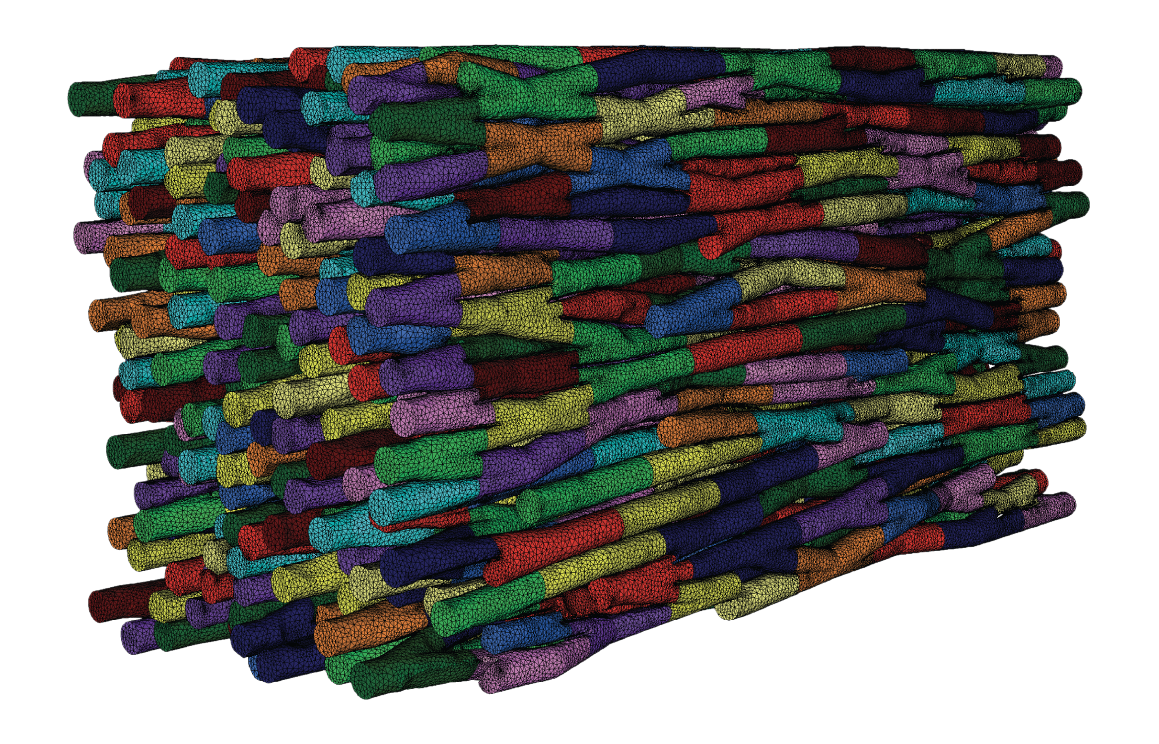
In particular, multi-scale mesh generation techniques were developed for cardiac geometries, ranging from single cells to complex cellular aggregates. These approaches, based on morphological characterization and geometric PDE models, enabled the construction of increasingly realistic meshes, scaling up to aggregates of more than 100 cardiomyocytes. This progression highlighted a computational cost increase of up to 30% compared to idealized geometries, emphasizing the trade-off between accuracy and computational complexity.
In parallel, Orobix developed scalable pipelines for 3D segmentation of cardiac tissue in HPC environments, exploring various deep learning approaches. This work resulted in a solution based on Attention UNet 3D, capable of automatically reconstructing individual cells with high accuracy (DICE score > 90%) from cardiac imaging data.
Finally, Deep Learning and Operator Learning models were developed for simulating cardiac ionic dynamics. Different architectures, including DeepONet and Fourier Neural Operator (FNO), were evaluated, with FNO showing superior performance. When extended to physiologically realistic models, these approaches achieved errors below 5% compared to traditional numerical methods, significantly reducing computation time during inference.
Impact and applications
The results of MICROCARD pave the way for a new generation of cardiac models capable of supporting more accurate and personalized diagnosis and treatment. The possibility of patient-specific simulations represents a major step toward precision medicine.
Beyond the clinical domain, the developed technologies can be applied in a wide range of industrial contexts, including quality control, predictive maintenance, and digital twin-based design. The integration of HPC and artificial intelligence demonstrates strong technology transfer potential, transforming solutions developed for biomedicine into reusable tools for other high-complexity domains.
Looking ahead
MICROCARD has demonstrated how the combination of high-performance computing, mathematical modeling, and artificial intelligence can drive high-impact innovation. With the advent of exascale supercomputers, it will be possible to tackle even more detailed and realistic simulations, bringing benefits to research, industry, and society.
To learn more about the project and its results, please refer to the official website and the related scientific publications.
